

I think the core of what Holistic Systems Cooperative is can be boiled down to two simple words: Mutual support.
That’s the foundation. Helping each other out—for the benefit of all involved.
Which sounds straightforward. And on an individual level, it kind of is. But when you zoom out to a collective or societal scale, mutual support is actually quite radical. It requires a paradigm shift—because we are living inside a different story, one that runs deep and often goes unquestioned.
The Story We’ve Been Told: “Take Care of Yourself First”
There’s a narrative that we’re fed—sometimes gently, sometimes forcefully—that says: If everyone just focuses on helping themselves first, eventually we’ll all be okay. From an individual perspective I think that’s valuable guidance.
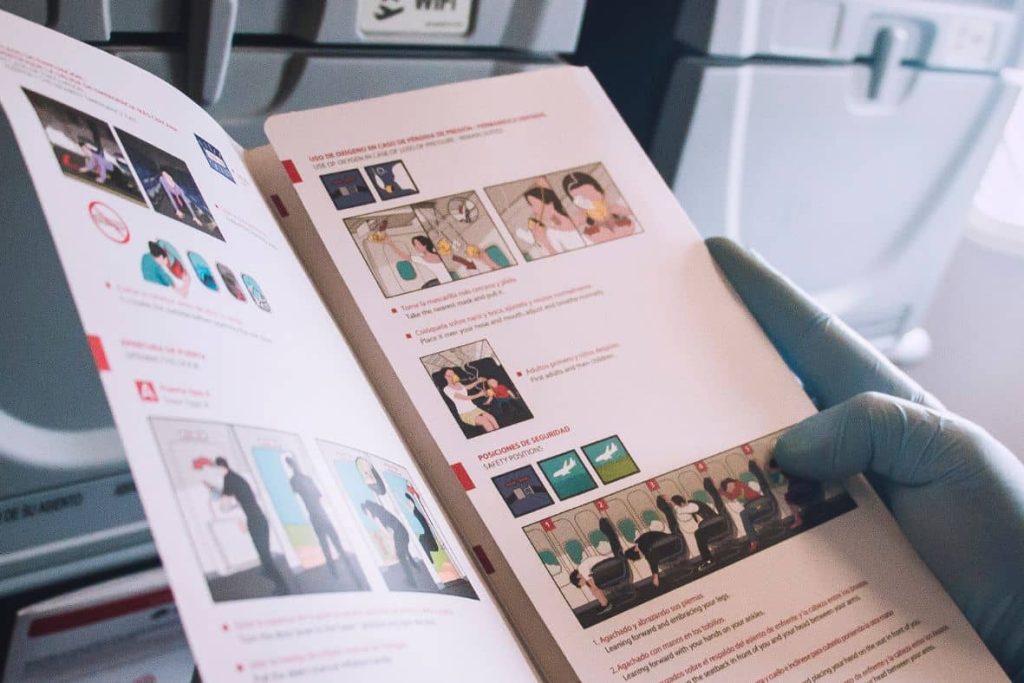
One of the most common ways I hear this illustrated is with the classic airplane safety line:
“In case of a cabin pressure emergency, place your own oxygen mask on first before assisting others.”
We’ve all heard it. And in that context, it makes perfect sense. If you pass out from lack of oxygen, you won’t be able to help the child next to you. So yes—on a plane, during a crisis, for a short window of time—it’s sound advice.
That idea has since been repurposed into a broader life philosophy, sometimes even called the “oxygen mask rule”: take care of yourself first. Prioritize your own health. Don’t overextend. Break codependency. Establish boundaries. All good things, especially when we’re talking about individual wellness, personal growth, and healing from relational imbalance.
But here’s where things start to slide.
This metaphor—useful in specific, acute, and individual cases—has been extrapolated into the scale of society. And that’s where the fallacy creeps in. Because society is not a pressurized airplane cabin. We are not all passengers in equal seats with equal access to oxygen and masks.
And most importantly: there is no singular moment of crisis, followed by relief.
The Oxygen Mask Fallacy: How a Self-Care Metaphor Became a Social Script
When we take this metaphor and scale it up to justify broader social behaviors or economic models, it starts to reinforce something harmful. It becomes a kind of soft social engineering that trains us to focus inward, stay in our lane, and prioritize personal stability before showing up for collective solutions.
There’s a reason why the flight crew repeats the oxygen mask speech on every flight. Because it’s counterintuitive. It’s conditioning. And that conditioning works—in the right context.
But now, imagine applying that same logic to the world outside the plane. To climate crisis. To wealth inequality. To housing and healthcare. To systemic injustice. In light of the multi-layered crisis we find ourselves in, it becomes way too oversimplified.
Nevertheless, this idea has seeped into our institutions, politics, and economy—and it’s not just a harmless metaphor. It has consequences.
Let’s look at some of the core issues with this narrative when applied to the collective:
1. Society is not a cabin emergency.
Our challenges are complex, ongoing, and structural. There is no singular oxygen shortage. We are not all starting from the same access to resources or safety. Some of us are born with oxygen masks already strapped on. Others never get one. This isn’t about individual readiness—it’s about structural distribution.
2. Self-first logic reinforces inequality.
“Get stable first” sounds neutral. But in practice, it privileges the already-resourced. It tells those with less that they must bootstrap themselves into capacity before they’re considered worthy of support. It creates a feedback loop where support goes where support already exists.
3. It misrepresents how interdependence actually works.
If we are fundamentally interconnected—as ecosystems, families, economies—then caring for others is part of caring for ourselves. Mutual support isn’t a luxury; it’s infrastructure. When someone else breathes easier, so do we.
4. It delays the systemic shift we need.
Framing solidarity as something to do “once you’ve got your life together” puts collective thriving perpetually out of reach. It’s like waiting to build a house after you’ve perfected each brick. It’s like saying, we’ll keep fighting until we get to peace. In truth, we gain stability through shared support, not after it.
The Economic Origin Story That Keeps the Narrative Alive
This “take care of yourself first” ethos isn’t just cultural—it’s economic. We’ve been trained to see it as common sense because it echoes one of capitalism’s founding myths: the idea that acting in one’s own self-interest produces the greatest good for all.
This belief is often traced to Adam Smith’s notion of the “invisible hand.” The basic version you’ve probably heard goes like this:
“If everyone pursues their own self-interest in a free market, the economy will balance itself out.”
But here’s the thing: that’s not what Smith actually said—or meant.
Adam Smith’s actual writings are far more nuanced. He was deeply concerned with moral philosophy, and he warned repeatedly that unchecked self-interest could distort the public good. In The Wealth of Nations, the “invisible hand” appears just once, in a narrow context—not as a universal law.
Over time, however, this small idea was lifted out of context, flattened, and weaponized into a justification for greed. It became the ideological fuel for neoliberalism: deregulation, privatization, individualism as virtue.
And so we live in a system that rewards looking out for ourselves, under the belief that somehow, magically, this will result in collective wellbeing. But… has it?
Because let’s be honest:
- Our wealth is concentrated in fewer and fewer hands.
- Our ecosystems are collapsing.
- Our social safety nets are fraying.
- Our sense of trust and belonging is eroding.
If this self-interest system were working, wouldn’t it… be working?
Conditioning Us to Keep Going It Alone
To keep this system intact, we need to be conditioned. Repeatedly. And this oxygen mask metaphor is one of the powerful stories that has been smuggled into a societal belief system. It quietly reinforces a paradigm where mutual care is seen as extra credit, not essential infrastructure.
And like the repeated instructions on a flight, we are trained over and over again to internalize behaviors that serve the system rather than our collective thriving.
As Noam Chomsky famously described it, this is the process of “manufacturing consent.” Not through overt force, but through subtle repetition of narratives that align with dominant power structures.
- Pull yourself up by your bootstraps
- You get what you earn
- If you’re struggling, it’s because you didn’t try hard enough
- The system works—you just have to play it right
- Look out for number one
- Dependence is weakness
- Make your millions—then give back
These aren’t just sayings. They’re instructions for how to behave in a system built on disconnection—and how to feel guilty if you reach for anything else.

Flipping the Mask: A Return to Reality
So what if we turned it around?
What if helping others put their mask on also helped us breathe easier?
What if building collective care structures made individual thriving more possible?
What if the path to well-being wasn’t solo success—but mutual flourishing?
This isn’t martyrdom or self-erasure. It’s not about abandoning self-care–it’s about embedding it within a relational ecosystem.
The shift isn’t from chaos → personal order.
It’s from disconnection → interdependence.
That’s the foundation of regenerative design, cooperative economies, mutual aid, and Indigenous knowledge systems. Nature doesn’t isolate effort—it distributes it. Forests share nutrients. Flocks move in synchronicity. Villages raise children. We are wired for reciprocity.
Embodying the Paradigm
I’m not saying that you should empty your bank account and give all your possessions away. The first step is a change of consciousness. It’s a reorientation toward how life actually works. And then begin to move and act and practice from that orientation.
Here are a few ways to start:
- Lean into existing relationships by noticing where reciprocity already exists and asking, “How can I deepen that?”
- Join or support a local mutual aid network—these are grassroots systems for people helping each other directly.
- Explore mutual credit, skill shares, or tool libraries where value flows without money.
- Practice asking for what you need and offering what you can without expecting a one-to-one return.
- Shift your definition of success to include collaboration, care, and collective well-being.
- Support cooperative businesses, land trusts, and regenerative projects that build real community infrastructure.
- Get involved with Solidarity Economy initiatives—these are happening in cities, rural areas, and online ecosystems everywhere.
There’s something to be said for flipping the dynamic of this story: what if helping others get their mask on actually helps me breathe easier, too?
Because when we stop trying to breathe in isolation, we realize—we’ve been surrounded by oxygen this whole time.
Oh yes, HSC is also playing in these new paradigms and models. Feel free to reach out and let’s shift embody the paradigm together.


